About Me

My photo
Surrey, United Kingdom

Sunday, 18 July 2010

Brooklyn by Colm Toibin

Having read Wolf Hall for our last book club we all agreed that Brooklyn by Colm Toibin seemed like a good 'easy read' choice for our next book.  It was the winner of the 2009 Costa Novel award and longlisted for the Man Booker 2009 and so we had high expectations.  The story is of a girl from a small town in Ireland who moves to Brooklyn to start a new life and follows her experiences there.  Whilst we all thought it would be quite a light read, I think we were all surprised by just how light it turned out to be.  The one male in our book club felt he had been duped into reading a chick-lit novel and, much as it pains me, I tend to agree with him.  What we all felt it lacked was any depth, any real emotional tie and, indeed, any real point.  I didn't feel I had learnt anything at the end of the book.  The emotions and plot were all things I have read before and I failed to find anything 'novel' about it all.  Few of the characters seemed likeable.  Plenty of opportunities for interesting storylines seemed to be passed over (the department stores attitude towards black customers for example) and neither of the love interests fitted my idea of a romantic hero.

Who knows, perhaps we all missed the point of this book?  In its defence, it is a very easy read and you do get swept along in the story.  It's just that I constantly had the sense of waiting for something to happen, for a plot development that never really came.  The dramatic incident that brings Eilis back to Ireland even felt to me a bit underwhelming and skimmed over.  Maybe I'm too big a fan of melodrama - what do you think?

Rebecca by Daphne du Maurier

I am ashamed to admit that I have never read any du Maurier, and apart from the opening line I knew nothing about Rebecca. So, having finally finished Wolf Hall I decided that what I needed was the kind of book that I could really get swept away by and everything that I had heard about Rebecca made me think it would be perfect.

And it was.

The atmosphere, the palpable sense of dread and uncertainty throughout the story and the pace of the plot make it a true page-turner.  What I found most interesting was the almost supernatural sense that du Maurier creates.  As I said, I knew nothing about the story and I was kept guessing right the way through.  I thought that Mrs Danvers could be Rebecca, or that all the other characters were ghosts.  The twists and turns in the plot don't feel like twists and turns - they all make sense and are perfectly possible.  Somehow the fact that none of it was supernatural made the whole thing seem more sinister.

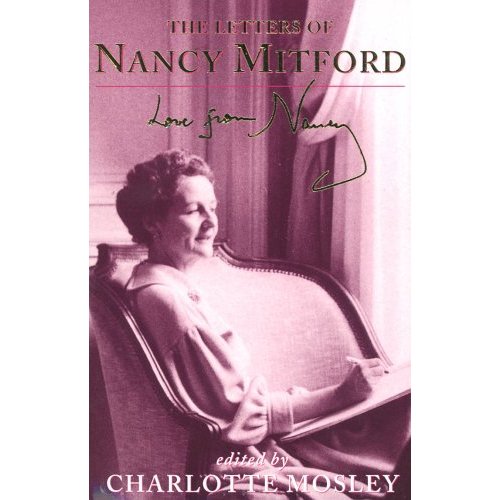
Love from Nancy: The Letters of Nancy Mitford

My fascination with the Mitford sisters seems to have a never ending source of fuel.  My latest venture into their lives came in the form of Love from Nancy: The Letters of Nancy Mitford  These letters have been edited by Charlotte Mosley, Diana's grand-daughter-in-law.  Faced with what must have been an inexhaustible supply of materials, Charlotte Mosley has produced a comprehensive and highly readable volume.  We follow Nancy from childhood right through to her last days.  The beauty of reading a volume of letters as opposed to a biography is that you hear the subject's true voice and consequently feel you are really getting to know them.  Nancy's dry and sometimes caustic wit rings clearly through all the letters, yet it is so liberally tempered with warmth and affection that it is hard to imagine anyone ever taking it the wrong way and being upset by her manner.  Nancy's life was not easy - Diana and Unity's associations with Nazism and Hitler caused her moral anxiety and pain, as did Jessica's elopement and emigration to the USA.  Even her love life was not straight-forward - her marriage to Peter Rodd whilst not necessarily an unhappy was certainly not a fulfilling one and her affection for 'the Colonel' never seems to have been fully reciprocated.
A wonderful insight to a wonderful lady - this collection is well worth reading.  I had it on my bedside table for some time and found it perfect to dip in and out of when no other reading material seemed to be the right choice.

Saturday, 1 May 2010

The Go-Between by L P Hartley

I wasn't sure about this book for about the first two chapters. It seemed to start very slowly and I even wondered if I had made a big mistake in choosing to read it. Like most book-worms, I hate wasting time reading a book I am not enjoying (when there are so many other books out there to be enjoyed) but at the same time I'm not one to give up halfway through and not finish the book. So, much to my delight, The Go-Between by L P Hartley does get into it's stride almost at the exact point you begin to question whether you want to continue reading it.

The edition I read was a Penguin Classic, with notes and a textual appendix. For all the additional information it gave me (there are a lot of classical and Shakespearian references throughout the book) I found this quite distracting - flicking to the relevant note broke the flow of reading and by then I was so caught up in the story that I resented being taken away from it. What I did like about the notes though was the extra dimensions it brought to the story. It reminded me of reading books for my A-Levels, when rather than reading the books for enjoyment you were focusing on the themes and symbolism in the story. I really enjoyed discovering these themes in a more relaxed way, without worrying about how I could discuss them in an essay and it surprised me how much you absorp without realising it - a good writer should make the themes more like an atmosphere, or a feeling, than just flashing beacons and footnotes and I really think that Hartley achieved this in The Go-Between. I utterly felt the heat of the Summer, the oppression of the weather conflicting with the (to begin with) care-free nature of Leo's stay at Brandham Hall.

The story centres around the memories of Leo of the Summer he spent at Brandham Hall - the family home of his school-friend Marcus. With Marcus struck down with measles, Leo is left to fend for himself. Marcus's sister Marian takes him under her wing and he begins to carry messages for her to the local farmer, Ted Burgess. Marian is engaged to Lord Trimingham, the local Viscount who was disfigured in the Boer War. Leo also becomes a go-between for Lord Trimingham and Marian and slowly these errands begin to reveal to him the adult world, with all it's complications and secrets. We live through Leo's triumphs at the village cricket match and after-game dinner when he sings solo, as well as his confusion and bewilderment at being thrust into a world and life he knows nothing about. Leo's worries and embarrassment are all too recognisable and throughout the story there is the feeling that as the heat rises, we are moving faster and faster towards an inevitable tragedy.

In fact, everything was so beautifully and vividly drawn that I wondered why I had never seen a film of it - it seemed absolutely perfect for an adaptation. A quick search on Amazon revealed that it had been made in to a film - starring Julie Christie and Alan Bates. I cannot think of a more perfect casting for this film, and I hope this gives you a sense of the novel itself.

The story is tragic and heart-breaking, but told in such an authentic and believable way. The characters seem real and there are even humorous passages, which of course heighten the sense of foreboding which runs throughout the story. A real gem of a book and one that, I think, should be more widely read.

Wednesday, 21 April 2010

We Have Always Lived in the Castle by Shirley Jackson

Over the past months I have read a number of rave reviews for We Have Always Lived in the Castle by Shirley Jackson, so when I was lucky enough to stumble across a second-hand copy in my local charity shop I snapped it up! Having just finished Wolf Hall I was looking forward to reading something compact and manageable.

I loved this book - everything about it was just magical. It was funny and sad, sinister and heart-warming. The characters are wonderful and so engaging - even Jonas the cat feels like an old friend. The atmosphere is so well built up with the mystery of the Blackwood family being revealed slowly and never spelt out for the reader until the very end, making the book a real page-turner.

Merricat (Mary Catherine), her sister Constance and Uncle Julian live in the family home, hidden away from the villagers. From the beginning we know a terrible tragedy has befallen the Blackwood family and that it has made the villagers wary of the remaining family members. The villagers fear and resentment eventually boils over in a frightening and destructive attack on the Blackwoods, before calm is restored once again and Constance (true to her name) and Merricat continue to live their reclusive lives.

A chilling but thoroughly enjoyable book, I am sure it will stay with me for many years to come.

Friday, 19 March 2010

The Perfect Summer: Dancing into Shadow in 1911 by Juliet Nicolson

I have quite mixed feelings about this book. I had been really looking forward to reading The Perfect Summer: Dancing into Shadow in 1911 by Juliet Nicolson, particularly as it was written by Vita Sackville-West's great grand-daughter. While there was much of interest, I couldn't help but get the feeling it was more like an anthology. There were plenty of extracts from writing of the time and interesting little anecdotes, passed down through the generations. Unfortunately, I think it just made the book as a whole feel a little incoherent. It jumped from one tit-bit to another and I didn't really feel that it drew any conclusion, or made any comment on the social circumstances of 1911. It did leave me wanting to find out more (particularly about Lady Diana Manners and the life of domestic servants) so from that point of view, it was very successful! I am not giving up on Juliet Nicolson though - I have The Great Silence: 1918-1920 Living in the Shadow of the Great War to read too...

Thursday, 4 March 2010

The Little Stranger by Sarah Waters

I have been wanting to read The Little Stranger by Sarah Waters since it was released, but what with waiting for it to come out in paperback and a heavy reading schedule (or rather, getting distracted by other books) I have only just got around to it. Thankfully, it was very much worth the wait. I don't know what it is about Sarah Waters, but she makes good writing seem incredibly easy. There is nothing particularly startling or unusual about her writing style but she can create atmosphere so well you can almost taste it. Her characters are always engaging and fascinating and within a few pages I felt like I knew the Ayres family and Dr Faraday like old friends. That is not to say that her characters are run-of-the-mill or stereotypical, it is simply that her writing brings them to life; the subtle use of idiosyncratic movements (Mrs Ayres twisting the rings on her fingers, Caroline biting the tips of her fingers) makes them seem so real and ordinary, while also absolutely creating tension and heightening the sense of the unknown. Even Hundreds Hall becomes a living, breathing thing - and it is the house really which is the central character of the plot. I won't discuss the plot as I can't help thinking that, like revenge, this book is best served 'cold'. But rest assured that it builds and twists, gives and takes, just as the very best gothic tales should.
Dr Faraday is an unusual narrator. In some ways he very much reminded me of Charles Ryder in Brideshead Revisited (a tough read, but a fantastic story with memorable characters). There is something distasteful about his obsession with Hundreds Hall and his attitude towards the Ayres is in turns condescending and arrogant, but for me having this 'unreliable narrator' gave me licence to believe and trust more in the Ayres family's point of view.
Highly recommended...as are all Sarah Waters' novels. They are accessible but a cut above the rest.

Current Reading:
The Perfect Summer: Dancing into Shadow in 1911 by Juliet Nicolson - An examination of the period of May to August in 1911 as Britain danced towards disaster.

Next book club book:
Wolf Hall by Hilary Mantel - This year's Booker prize winner is an obvious choice for a book club. It's a doorstop of a book but I can't wait to get started!